Outmatic
Article· July 19, 2026
The moment to rebuild your commerce platform is now

When you add an AI assistant to your eCommerce, it answers questions, writes decent product descriptions, and everyone is impressed in the demo. Then you look at the numbers a month later and conversion has barely moved. The instinct is to blame the model or the prompt, when the real problem is usually structural.
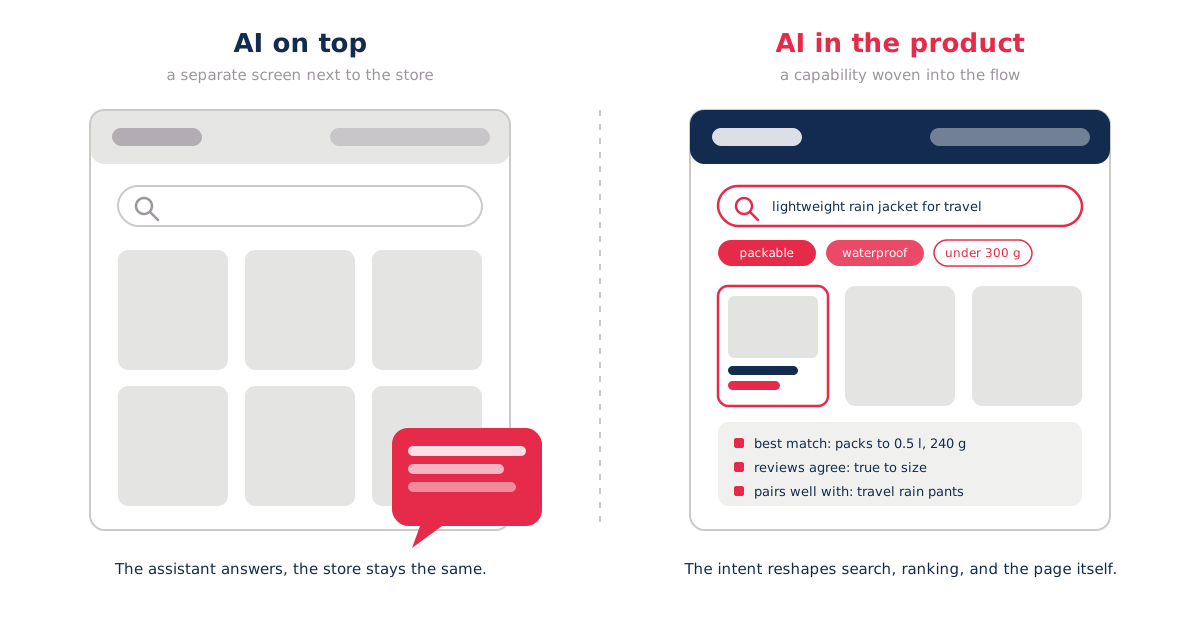
Often the AI is sitting on top of the product instead of inside it: a separate screen the user has to notice, open, and talk to, rather than a capability woven into the flow they were already following.
The implementations that actually shift conversion work somewhere less visible, because they change how the store searches, ranks, filters, and explains itself. The floating chat widget is the part that looks like AI, and it is rarely the part that pays for itself. The prize for getting this right is not theoretical either, because Shopify's own commerce data from the first quarter of 2026 shows AI-referred orders growing almost thirteenfold year over year, with AI-referred visitors converting at rates nearly 50 percent higher than organic search.
The three layers and where the gains actually live
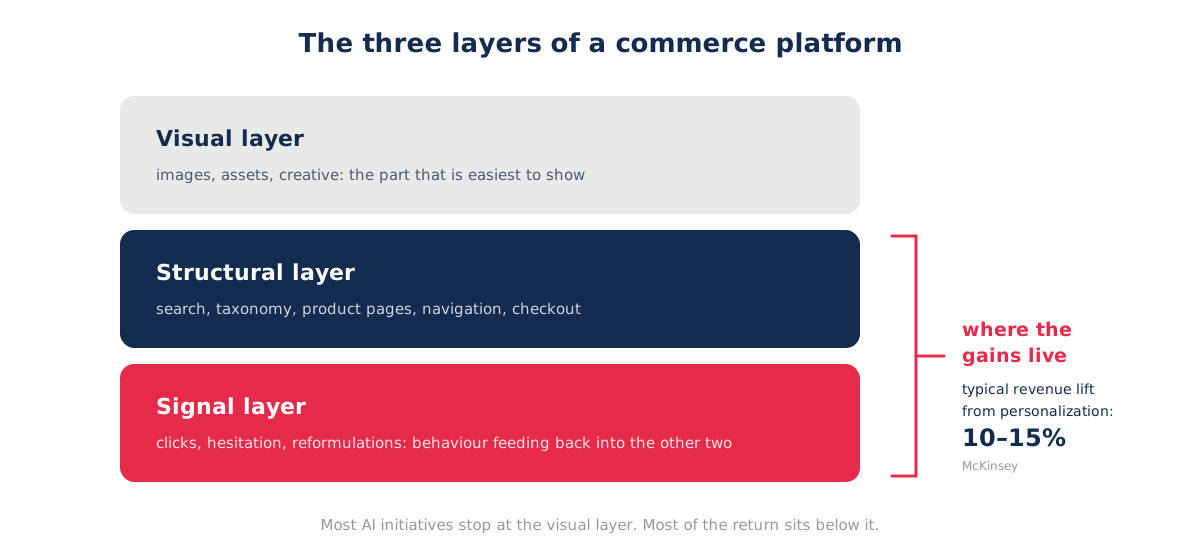
A useful way to look at any eCommerce platform is to split it into three layers:
- The visual layer is images and assets, the part most pitches start with because it is easy to show.
- The structural layer is search, taxonomy, product pages, navigation, and checkout, the machinery that turns a shopper's intent into a decision.
- The signal layer is real user behaviour: what people click, where they hesitate, and what they reformulate, feeding back to improve the other two.
Most of the return comes from the structural and signal layers rather than from prettier assets.
McKinsey's research on personalization puts the typical revenue lift at 10 to 15 percent, with results ranging from 5 to 25 percent depending on sector and execution, and personalization is structural and signal work by definition, since it lives in what you show, in what order, and to whom.
Generating a nicer hero image is simply not the same kind of work as helping a confused shopper find the right product and feel confident buying it.
What AI in the product actually means
An AI bolted on returns text, a paragraph in a chat bubble the user has to act on themselves. An AI built into the product returns structured output that the interface renders as native components, so the intelligence arrives as recommended products, dynamic filters, size advice, a re-ranked result set, or a clear next step. In practice the model calls your product APIs, grounds its answers in your own catalogue, reviews, and policies through a pattern known as retrieval-augmented generation, or RAG, and hands back structured data that the frontend lays out as a proper page.
Consider a shopper who types that they want a lightweight rain jacket they can pack for travel. A bolted-on assistant writes a helpful reply and leaves the rest to them. A product with AI inside it turns that sentence into retrieval, ranking, a clarifying question when the request is ambiguous, and a comparison, all happening inside search, the listing, and the product page. The industry is heading the same way, and Shopify's Sidekick, an assistant that lives in the store admin rather than in front of the shopper, is interesting less for the copy it generates and more for the fact that it now proposes merchandising moves and store changes on its own initiative, which is AI entering structural decisions rather than only filling in text.
The architecture underneath
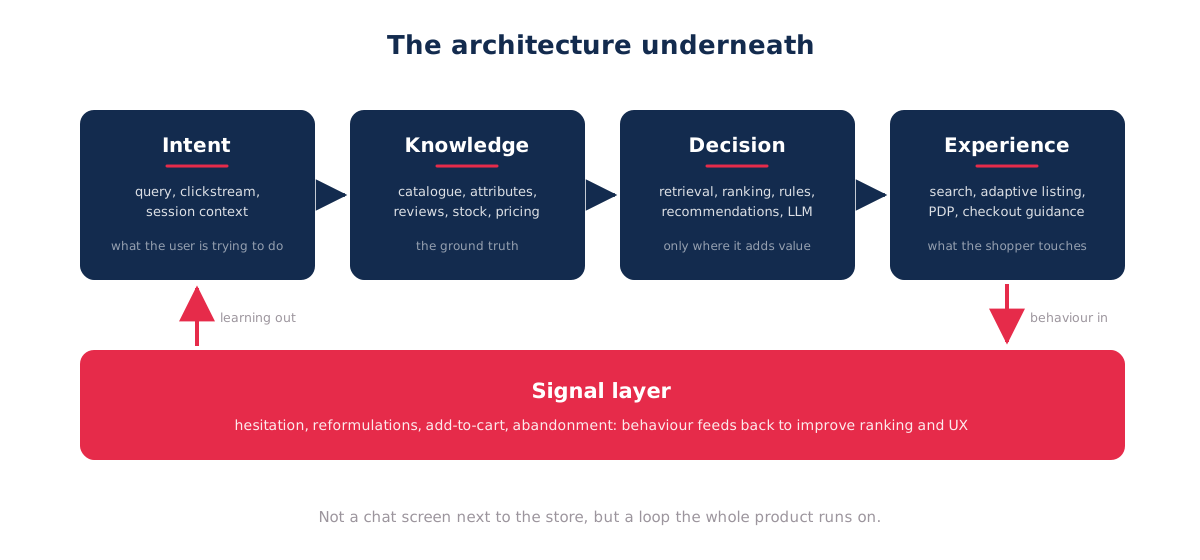
Making this work is not a single feature but a platform built from a few clear blocks. An intent layer captures the query, the clickstream, and the session context, because that is where you learn what the user is actually trying to do. A knowledge layer holds the normalised catalogue with clean attributes, reviews, policies, stock, and pricing, the ground truth the AI stands on. A decision layer combines retrieval, ranking, rules, and recommendation models, with a language model orchestrating only where it genuinely adds value. The experience layer is what the shopper touches, from conversational search to an adaptive collection page to a product page that summarises reviews and advises on fit. Around all of it, the signal layer watches hesitation, reformulations, add-to-cart, and abandonment, and feeds everything back to improve ranking and UX over time.
The difference from a classic copilot is that this AI does not only answer. It changes the navigation, recomposes the page, and reorders the results, which makes it a property of the system rather than a screen sitting next to it.
Where to start
For a rebuild we would start with semantic search and discovery, because search is where buying intent concentrates. Industry benchmarks consistently show that visitors who use site search convert at 1.8 to 3 times the rate of those who only browse, and studies routinely attribute 30 percent or more of eCommerce revenue to search sessions. In our experience, once a catalogue grows past a few thousand products classic search and filters start to strain while conversation reads intent far better. Dynamic ranking and merchandising come next as the heart of the structural layer, followed by an intelligent product page that brings review synthesis, fit advice, alternatives, and bundles into the layout as native components. Post-sale support follows, since returns and order status are repetitive, well-scoped questions that suit automation with human escalation, and asset generation comes last, because nice images on top of weak discovery do not sell anything.
A roadmap that holds up
The work starts with the catalogue, rebuilt as a semantic system rather than a product table, with clean attributes, a consistent taxonomy, embeddings that let the system understand products by meaning rather than by keyword, and solid internal APIs, because without this grounding the AI loses the user's trust quickly and that trust is expensive to win back. On that base you replace search and filters with hybrid discovery, keeping the classic filters for people who already know exactly what they want and adding intent interpretation and clarifying questions for the moments when the request is vague.
The product page then becomes a decision surface, with review summaries, pros and cons, fit, compatibility, and comparisons built into the layout rather than exiled to a chat window. And the loop closes with systematic quality evaluations before every deploy, telemetry from day one, and latency budgets, because without these the AI stays demo-grade forever, impressive in a meeting and unreliable in production.
The short version
The question is not whether to add AI to your store, since almost everyone already is, and shoppers have moved even faster than the platforms. McKinsey found that 71 percent of consumers now expect personalized interactions and 76 percent get frustrated when they do not receive them, which means this experience is quietly becoming the baseline rather than the differentiator. The better question is where you put the intelligence, because decoration on top of the interface is easy to build and just as easy to ignore, while intelligence inside the product, living in search, in ranking, and on the page where the decision actually happens, is harder to build and much harder for a competitor to copy.
That is the work worth doing, and we like doing it side by side with the teams who own the store. If you are weighing a rebuild, we are happy to look at your catalogue and your funnel together and figure out where the real leverage is.